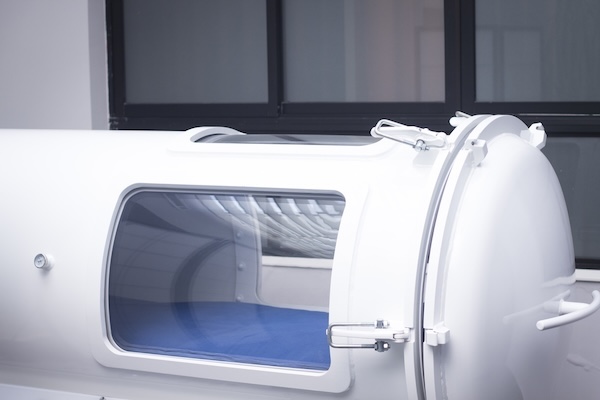
SUMMARY: The evidence supporting hyperbaric oxygen therapy (HBOT) for healing after elective surgery is limited and of low quality. There are some studies suggesting potential benefits. There is currently no high-quality evidence to recommend routine HBOT for uncomplicated elective surgical wound healing.
Hyperbaric oxygen doesn’t increase the hemoglobin oxygenation in your blood. The high pressure increases the PLASMA concentration of oxygen. This plasma oxygen is particularly helpful in areas where there is poor blood perfusion (injury, poor circulation, diabetes, arterial disease) and inflammatory areas. When it increases tissue oxygen, it reduces inflammation, helps new blood vessel growth, and upregulates growth factor.
It is being looked at in surgery to see if it helps with the body’s response to the stress of surgery and helps wound healing.
The studies show mixed results, and many of them are criticized for poor study design, small numbers, or obvious bias. There are clear studies showing hyperbaric oxygen helps when there is tissue damage- think infections, burns, diabetic wounds, radiated tissue.
The jury is out. There are clearly studies which show it helps in difficult wounds where there is poor blood perfusion due to infection, radiation, crush, burns, or poor vascularization. But for elective cosmetic surgery, we are doing the surgery in healthy patients. Given the cost, time, potential side effects of hyperbaric oxygen, and no great supporting studies yet for elective cosmetic surgery patients, it is not standard.
The current consensus is “the overall evidence base remains insufficient to support routine use of HBOT for recovery from standard elective surgery.”
If you want to do hyperbaric oxygen around the time of surgery, go for it. Oxygen helps you heal. I discuss with my patients prior to surgery to get their blood levels up to the higher range of normal, and part of this reason is to help get more oxygen to the tissue to heal the wounds.
The issue when patients ask me about HBOT in cosmetic surgery is that there is not good science data on it yet. When should you start? What is the goal amount? How many days should you do it? Should you do a treatment before surgery? Start after surgery? The day after? Two days after? Should you do it daily? Weekly? For how long? What is the ideal timing? Is there an endpoint?
This is the issue when things are not studied. There is a cost to doing interventions, and I’m not just referring to the money. If you just had a mommy makeover, say a breast reduction and tummy tuck, that is a big surgery. Do you get in your car in your bandages with your drains, keeping bent at the waist, on pain medication and not feeling great, to drive to the center to get into the chamber to lie there for 2 hours? Can you stay bent in the chamber? Do you do it the day after surgery? Two days after? Do you get clastrophobia? Does all that movement cause a different issue- like you disrupt your sutures, increase your swelling and bruising, or pull something?
For sure I think there is a benefit of HBOT for those with difficult wounds. I have been repeating over and over the clearer indications for hyperbaric oxygen treatment benefits- infections, radiated tissue, nonhealing wounds, burns, areas with poor blood supply. But a surgical injury like a tummy tuck in a healthy patient is not that. You have 98% – 100% saturation of oxygen of your blood on room air. You have blood perfusion to all your tissue. You have a controlled, crisp surgical injury- not a crush, radiation, or burn.
So I don’t see a clear mandate for it yet.
The information provided on this website is for general informational purposes only and does not constitute medical advice, diagnosis, or treatment. Always seek the advice of a qualified healthcare provider for any questions regarding your health or medical condition.